

The CDC recommends cleaning your facility within 24 hours of a disaster. Your focus should be to save your belongings, minimize structural damage, prevent mold growth, and disinfect! Here’s a checklist to follow:
Safety first
Cleanliness is secondary. Your first course of action should be to protect yourself and your family from any potential hazards. Floodwater may also contain sewage and other contaminants that can take a toll on your belongings. In this case, the building is definitely not habitable while the cleaning takes place. Move your pets and children to a safer place immediately.
Shut off the power and gas supplies immediately—preferably before even entering the house. Wear rubber and non-porous boots, eye protection, and gloves while you’re at it. This will protect you from the risk of an electric shock.
Protect your belongings
After you’ve turned off the power supplies, take a walk through the affected area and see if any of your belongings are still salvageable. If you feel like something can’t be washed and disinfected, you might have to remove it. These items may include pillows, rugs, mattresses, books, carpets, upholstery, cosmetics, and toys. You might also need to discard your drywall and insulation. If there’s a well in the house, you may want to disinfect it too.
Also, examine the walls, windows, and floors, and check whether there are any cracks in the foundation. Pump out the water using an electric suction pump. Follow up with a vacuum cleaner. This may take a few days. Get an electrician to inspect the electrical system before turning it on again.
Cleaning
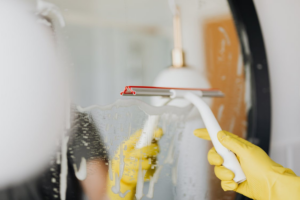
After you’re done pumping put the water, you need to clean the space, followed up by disinfecting. Your routine household cleaners should be enough to remove the dirt and debris that comes with the flood. If the entire house is flooded, we recommend buying these products in bulk, so they cost you less. Always refer to the instructions on the product label before using them.
Stick to all-purpose detergents to clean textiles. On the other hand, chlorine bleach disinfectants work well for carpets and furniture. If any of your textiles are made of wool, send them to a dry cleaner.
Start cleaning your floors and woodwork, and by scrubbing them with an ammonia-free detergent. Carry out this step within 48 hours of the flood, to prevent mold and mildew growth. The next step is to disinfect the floors with an EPA-approved disinfectant.
JSI Supply is a renowned supplier of premium-quality industrial and janitorial products in Kansas City. We have 20 years of experience in guaranteeing great quality, customer service, and safety. Get in touch to invest in our cost-saving disinfecting solutions.