
According to CDC, you can contract the COVID-19 virus by touching surfaces as well. As information about the spread of SARS-CoV-2 continues to emerge, a number of false data and myths around surface disinfection have been doing the rounds.
Here, our sanitary maintenance expert in Kansas City discusses three disinfecting myths that are sabotaging your cleaning efforts:
1. Disinfectants work right off the bat
While it’s nice to imagine our disinfectants zapping virus particles in a single swipe, it’s not true — it takes time. In fact, to clear the disinfectant test, the protocol allows around 10 minutes of contact/dwell time. Simply put, anything that works within this timeframe can be sold as a disinfectant.
Regardless of what product you use, checking the product directions for how much time surfaces should stay wet is important. To kill germs, you may have to saturate the surface for some minutes.
2. Plant-based disinfectants aren’t effective
While you might be skeptical of plant-based and eco-friendly disinfectants, don’t be too quick to write them off. As long as the product is registered as a disinfectant with the EPA, it works. While most alcohol-based products are made with isopropyl alcohol (from petroleum), ethyl alcohol (alcohol made using plants) is an incredible plant-based option approved by the EPA.
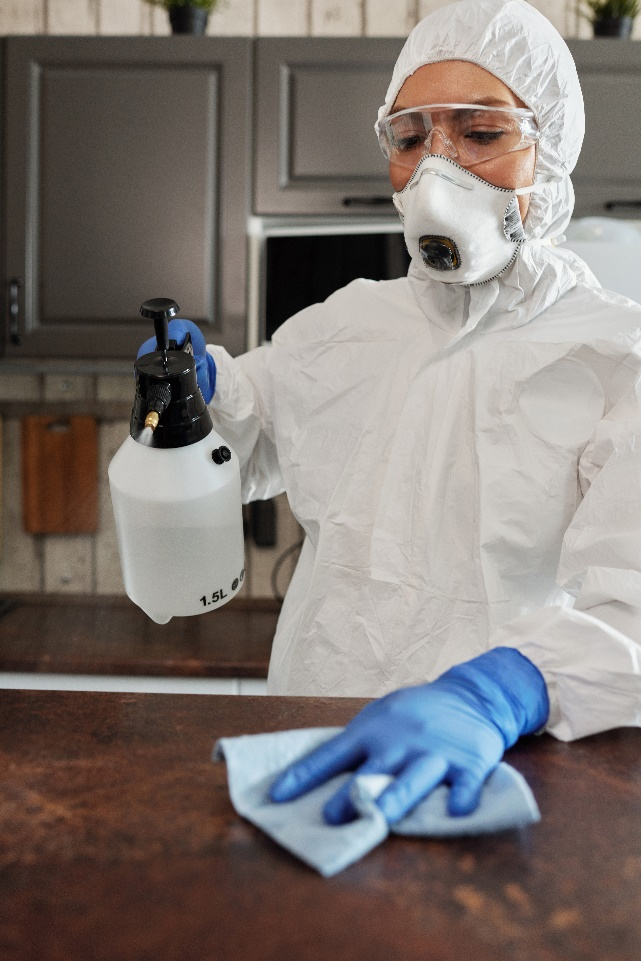
3. There’s no difference between disinfecting and sanitizing
Although the terms ‘disinfecting,’ ‘sanitizing,’ and ‘cleaning’ are used synonymously, they’re very different things.
Cleaning means the removal of impurities, dirt, and germs from surfaces. While it doesn’t kill germs, it removes them, thereby decreasing their numbers and the risk of spreading infection. In contrast, disinfecting means using chemicals, for instance, disinfectants registered by the EPA to kill germs on surfaces. This process doesn’t necessarily get rid of germs or clean dirty surfaces, but by killing germs on a surface (once the cleaning is done), it can bring down the risk of spreading infection.
On bacteria, sanitizing entails a 99.999% (five nines) reduction. However, disinfecting requires a greater reduction, that is, 99.9999% (six nines). Once you start making claims about killing viruses (which are harder to kill than bacteria), you’re talking about disinfecting. There’s one level higher though, which is known as sterilizing. However, this is only used for medical equipment.
JSI Supply’s janitorial and sanitation products help you go green
Irrespective of what industry you’re operating in, creating a sanitary environment that ensures optimal health and safety is essential. However, procuring top-of-the-line sanitary supplies is difficult. At JSI Supply, our top-notch industrial supplies in Kansas City meet the small to intricate commercial cleaning needs and remove disease-causing agents.
Get in touch with us now for more information on our sanitary and industrial products!