

Cleaning hospital facilities means you’re dealing with a lot more than dust and debris. There are body fluid spills, biological waste, and used PPE and syringes to take care of—all of which carry transmission risk. In this post, we will walk you through the process of critical hospital cleaning tasks.
How do cleanliness practices differ?
Over the course of this pandemic, hospitals and clinics have altered their SOPs and workflow. Most hospitals now have separate waiting rooms for sick and regular visits. Routine visits are safer than ER visits. This means that ERs have more extensive cleaning requirements compared to well-visit rooms. To determine what type of cleaning works well for a particular time slot or patient care area, you need to determine the risk of pathogen transmission.
How to assess the risk?
The risk primarily depends on three crucial factors that are:
- Degree of surface contamination.
- Vulnerability of the patients to the infection risk. Any surface in a care area that is home to critical or immuno-suppressed patients requires more rigorous cleaning.
- Potential for virus exposure. This is assessed by defining a surface as high- or low-touch areas. High-touch areas include bed rails and low-touch surfaces could include walls and windows.
Together, these three factors determine whether a certain spot in a healthcare facility needs infrequent or rigorous environmental cleaning. The risk level (low, moderate, or high) also determines the cleaning methodology, the person responsible, and cleaning schedules.
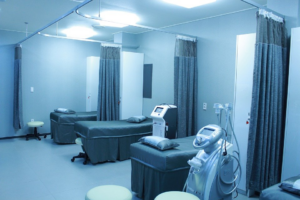
General guidelines
Always designate an employee to conduct a visual preliminary site assessment of the healthcare facility. They’ll help you determine the type of PPE required, any transmission-based precautions, and the need to keep the patients safe.
It’s a good practice to move from cleaner to dirtier areas to avoid the spread of microorganisms. Instruct your staff to touch low-touch surfaces before the high-touch surfaces. During terminal cleaning, start with common surfaces and shared equipment and then move to items touched during patient care. After you’re done, you can move to surfaces and items touched directly by the patient.
For surfaces such as bed rails, we recommend a top to bottom approach. Clean the dirty surfaces first so the dust and microorganisms fall off and you can clean the floor afterward.
JSI Supply is offering industry-grade disinfectants and cleaning solutions to help your hospital stay clean, sanitized, and disinfected. Shop now if you’re based in Kansas City.